

Affinitē Intelligent Automation FAQ
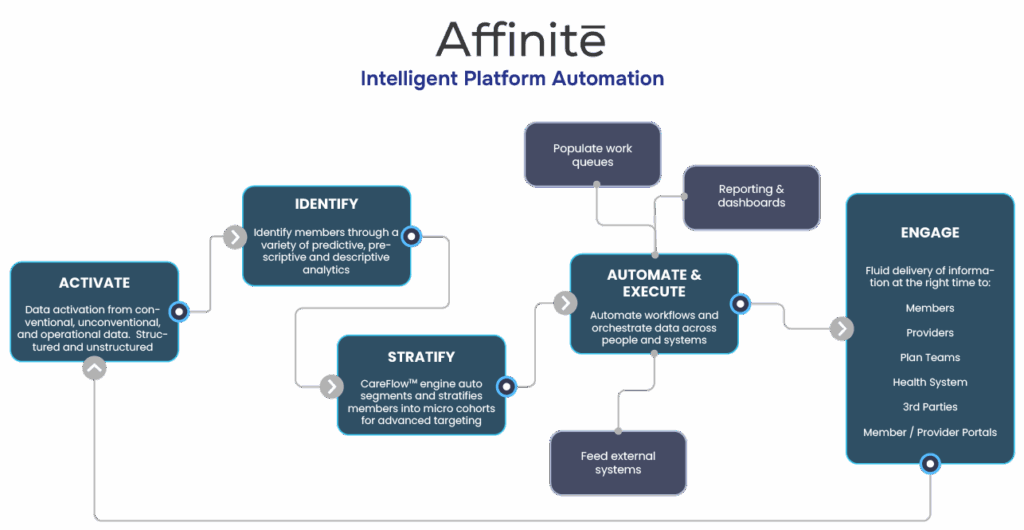
Affinitē Intelligent Automation is an AI-driven automation solution that helps health plans streamline clinical and operational workflows by embedding real-time analytics directly into decision-making processes. It enables organizations to move from fragmented, manual processes to coordinated, automated action across the care continuum.
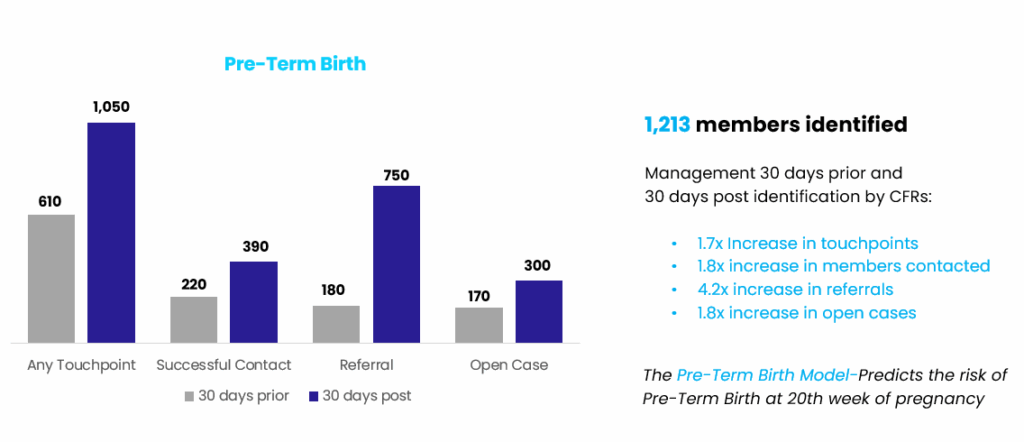
Affinitē Intelligent Automation delivers real-time insights and automated workflows that enable faster, more proactive interventions. By ensuring the right information reaches the right teams at the right time, the platform helps health plans close care gaps, improve coordination, and drive better member outcomes.
Affinitē Intelligent Automation replaces fragmented, manual workflows with intelligent, automated processes that evaluate data continuously and trigger next-best actions. This reduces administrative burden, eliminates delays, and allows care teams to focus on higher-value clinical activities.
Unlike traditional automation tools that rely on static rules or scripted processes, Affinitē Intelligent Automation combines real-time analytics, predictive insights, and configurable workflows to drive dynamic, data-driven decision-making. This allows health plans to automate complex clinical and operational processes, not just repetitive tasks.
Affinitē Intelligent Automation breaks down silos by enabling unified, cross-functional workflows across clinical, operational, and administrative teams. With shared data and coordinated processes, organizations can improve communication, streamline handoffs, and ensure continuity of care.
Yes. Affinitē Intelligent Automation is designed to integrate seamlessly with existing payer systems, clinical platforms, and data sources. This allows health plans to enhance current workflows without replacing core infrastructure, enabling faster adoption and greater operational impact.
Affinitē Intelligent Automation improves efficiency by automating workflows, reducing manual effort, and enabling earlier, more targeted interventions. By aligning analytics with execution, the platform helps reduce avoidable utilization, optimize resource allocation, and lower overall operational and medical costs.